

Mature coconuts, graded by weight.
Kelapa tua from coconut plantations in Johor, Malaysia's largest coconut-producing state. Graded A, B or C by the weight of each nut, and supplied dehusked or whole with the husk on.
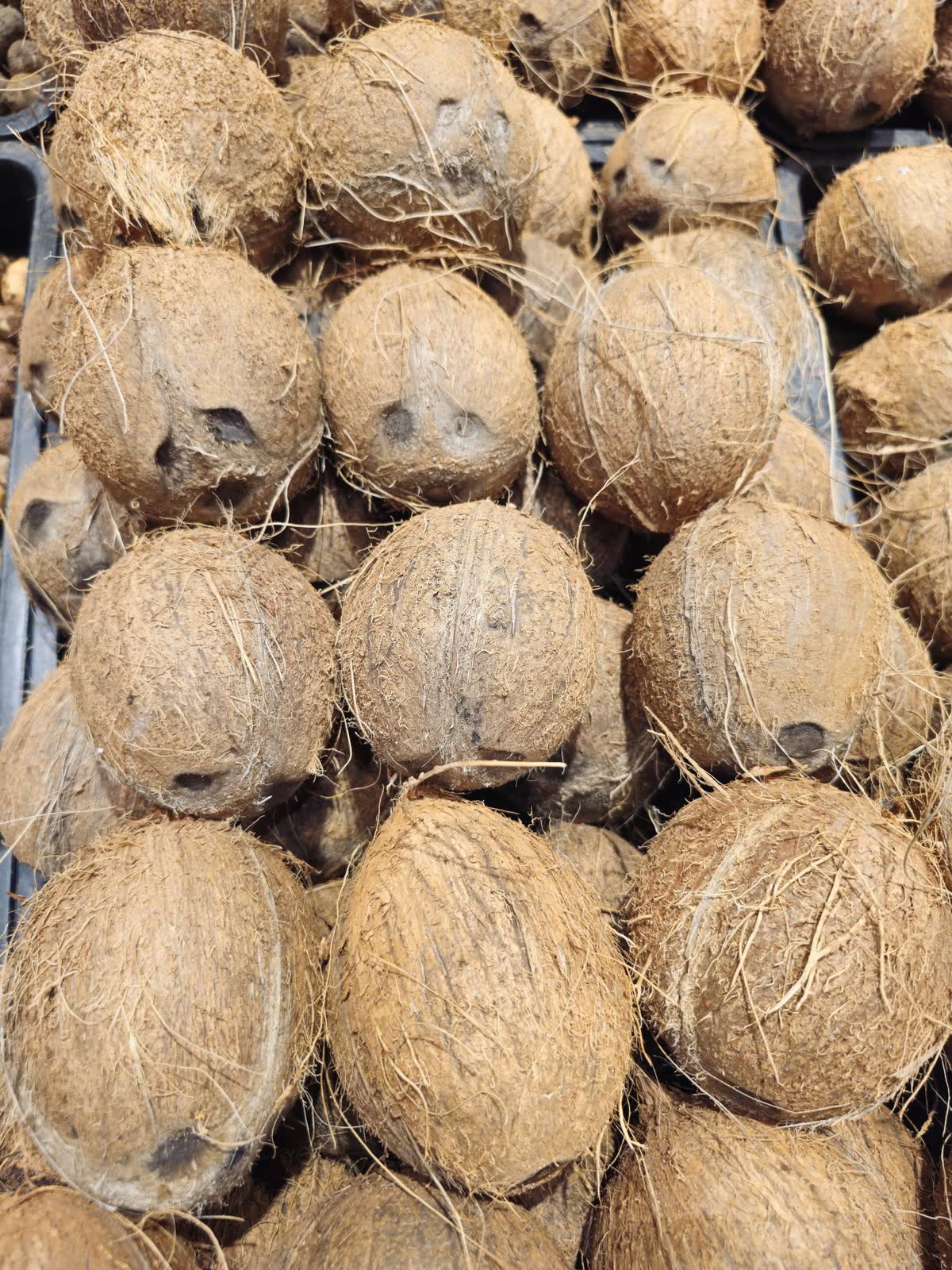
Three grades, two forms.
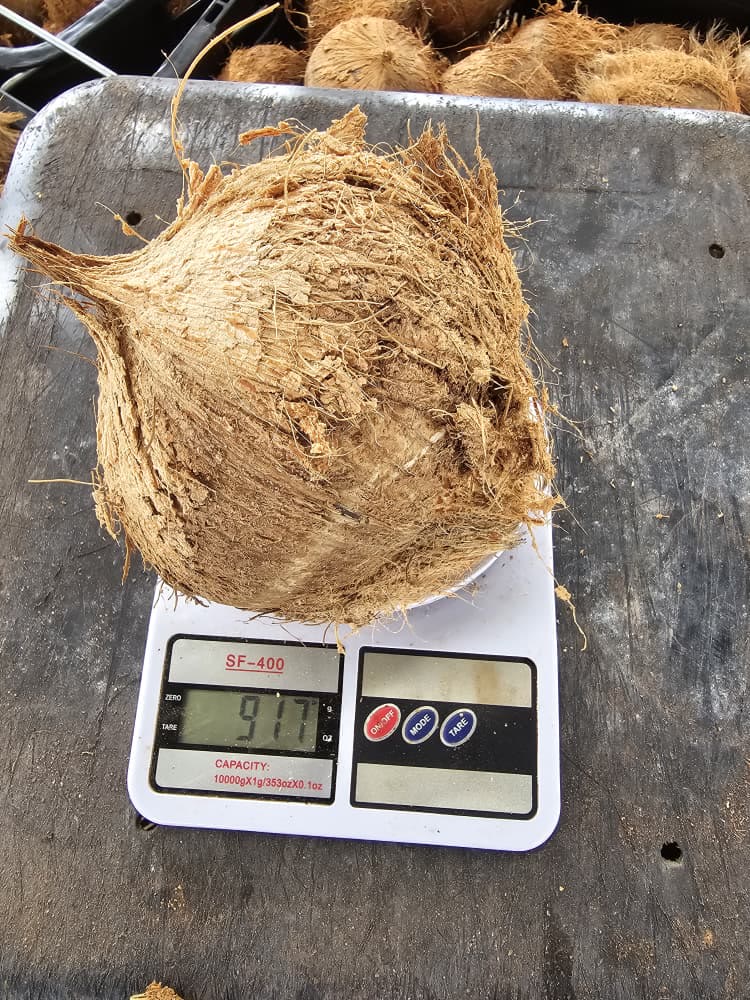
Grades are set by the weight of each nut. Tell us the form and grade you need, and we will confirm availability and price for your volume.
Dehusked
Husk removed. Weight per nut.
- Grade A
- 800 g and above
- Grade B
- 450 g to 790 g
- Grade C
- Below 450 g
Whole, husk on
Husk left on. Weight per nut.
- Grade A
- 1.2 kg and above
- Grade B
- 700 g to 1.1 kg
- Grade C
- Below 700 g
Dehusked nuts weigh less and pack tighter, which lowers freight per nut. Whole nuts keep the husk as natural protection, which helps when the nuts need to travel or be stored for longer.
What mature means.
Kelapa tua is the fully mature coconut, left on the palm for about a year until the husk turns brown and dry. By then the shell is hard, and the white kernel inside is thick and firm, with less water than a young coconut.
That is a different product from kelapa muda, the young coconut sold for its water. This line is mature nuts only.
- Husk
- Dry and brown. A green or yellow husk means the nut was picked young.
- Kernel
- Thick, white and firm when the nut is split.
- Water
- Some water remains, and you can hear it when you shake the nut. A silent nut may be old or cracked.
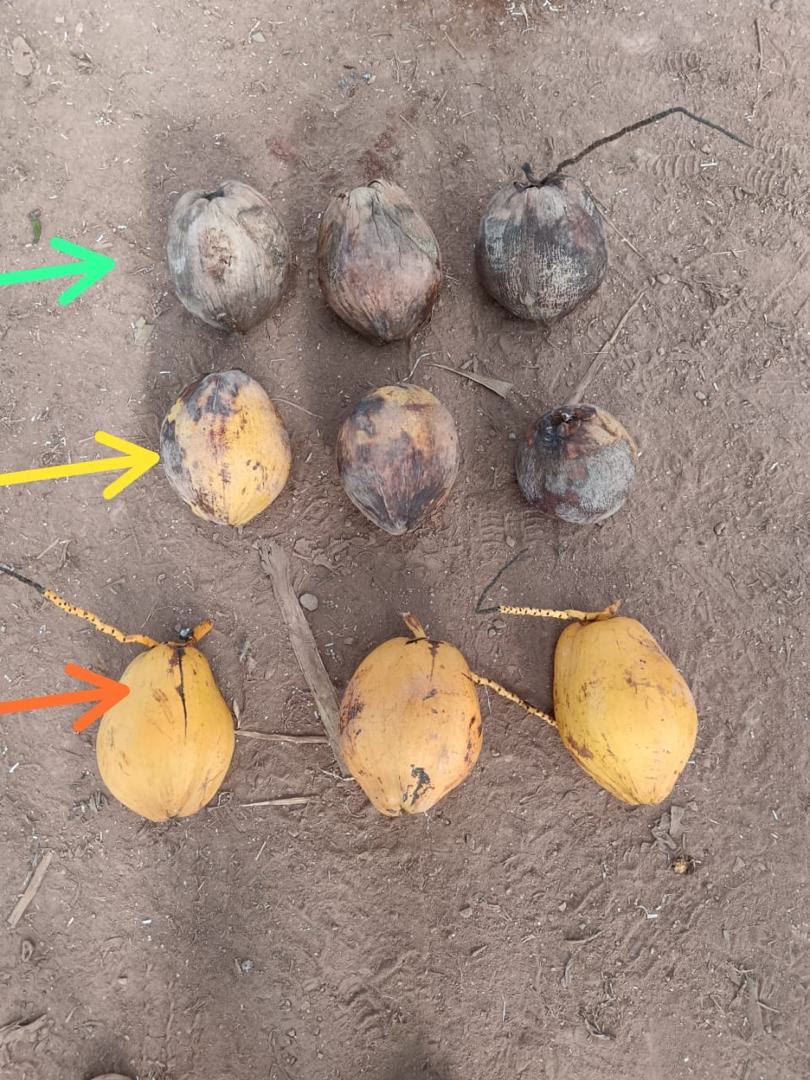
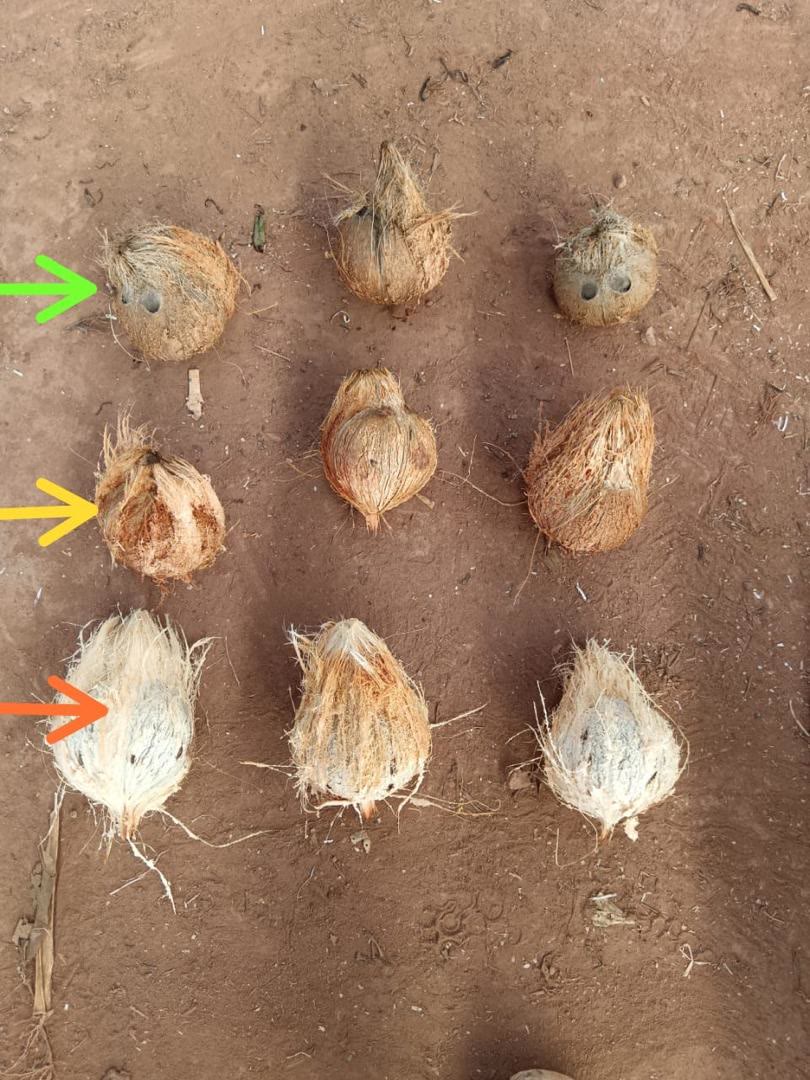
Field photos showing three stages side by side.
What buyers use it for.
The value of a mature coconut is in its kernel, and most coconut products start there.
Coconut milk and creamsantan
Pressed from freshly grated kernel. The base of rendang, curries, nasi lemak and kuih.
Grated coconutkelapa parut
Sold fresh at wet markets and used across cooking and desserts.
Toasted coconutkerisik
Grated kernel dry-fried until golden, then pounded to a paste.
Desiccated coconut
Grated and dried kernel for bakeries, confectionery and food manufacturing.
Virgin coconut oil
Pressed from fresh kernel, without the drying step used for copra.
Copra and coconut oil
Dried kernel, pressed for coconut oil, with coconut meal left over.
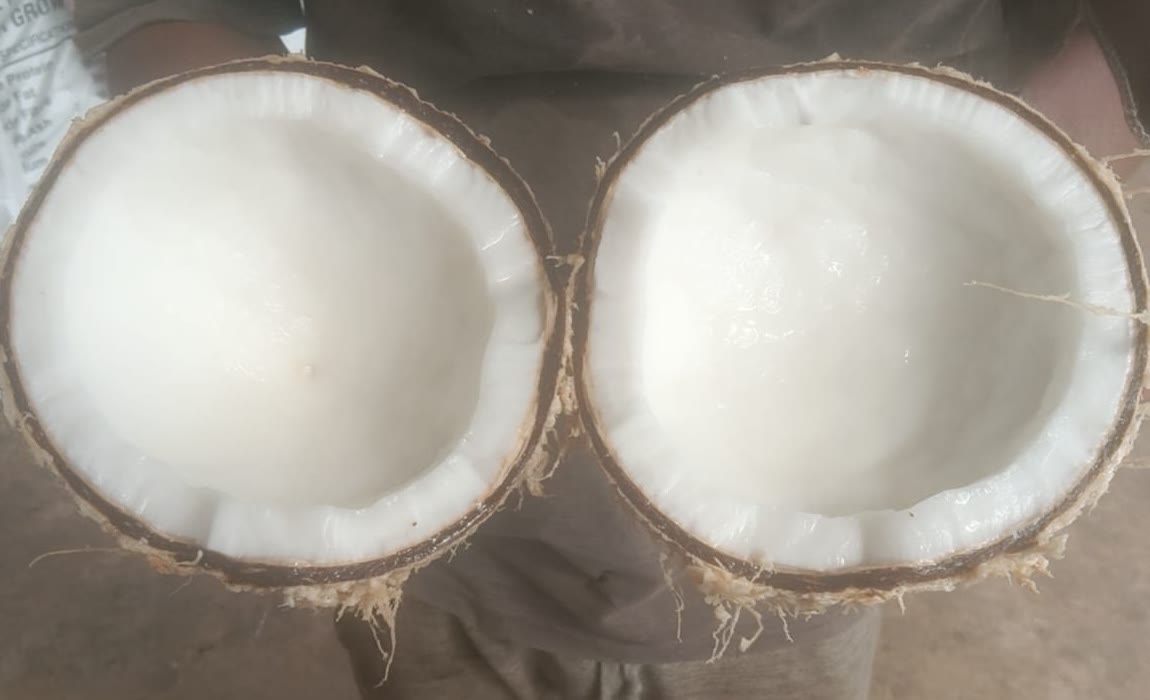
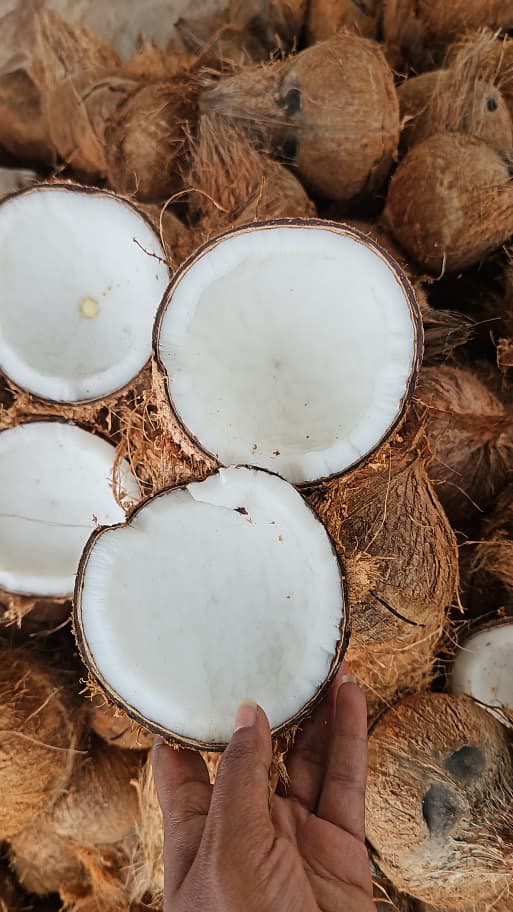

Sourced in Johor.
Johor is Malaysia's largest coconut-producing state. We source mature nuts from established plantations there, and handle the trade: matching grade and form to your order, agreeing terms in writing, and arranging collection and delivery.
-
01
Harvest
Nuts are picked once fully mature, when the husk has turned brown and dry.
-
02
Grade
Sorted by weight into Grades A, B and C, then dehusked or left whole to order.
-
03
Confirm
Form, grade, quantity, price and delivery are agreed in writing before anything moves.
-
04
Deliver
Collected at source and delivered to your premises, or handed over at an agreed point.
Getting a quote.
Five details let us come back with a firm price.
-
01
Form
Dehusked, or whole with the husk on.
-
02
Grade
A, B or C. Say if a mix of grades works for you.
-
03
Quantity
Number of nuts or tonnes, and whether it is a one-off or a regular order.
-
04
Delivery
Where the nuts need to go, and by when.
-
05
Destination country
If the coconuts are leaving Malaysia, tell us where they are going.
Start a conversation.
Send us a brief on what you need, or call the desk directly. We answer within the business day.